
admin June 30th, 2010
Comments Off
Injury is a silent epidemic that steals the lives, hopes and dreams of its victims. Every year 70,000 people die from preventable injury in Bangladesh. Of these, 30,000 are children, making injury the leading cause of death among those aged 1 to 17. These injuries include road and traffic accidents, falls, cuts, burns and drowning. Drowning alone claims the lives of 17,000 children each year. Formed in 2005, CIPRB is dedicated to reducing the incidence of injury, death
read more...
admin July 18th, 2010
Comments Off
The International Drowning Research Centre Bangladesh (IDRC-B) was officially launched on Wednesday 4th August in Dhaka with over 200 people attending the launch ceremony. The centre, which is based in Dhaka, is the first of its kind anywhere in the world and will carry out research to develop effective and sustainable drowning interventions that are appropriate for Bangladesh and countries with similar social, cultural and risk environments, especially neighbouring countries across Asia. The IDRC-B is a part of the Centre
read more...
admin July 12th, 2010
Comments Off
Many top experts and researchers in the field of drowning prevention gathered in Dhaka on Thursday 5th August to discuss ways forward for developing countries to reduce the child death mortality rate. The ‘Workshop on Drowning Prevention in Low Resource Settings’ was coordinated by the International Drowning Research Centre – Bangladesh (IDRC-B). Speakers included Dr AKM Fazlur Rahman, Dr Saidur Rahman Mashreky and Dr Aminur Rahman of CIPRB. Also presenting was Dr Michael Linnan of The Alliance for
read more...
admin May 24th, 2010
Comments Off
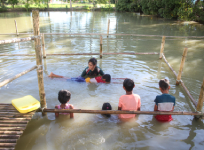
Earlier in the month of June, the International Drowning Research Centre – Bangladesh (IDRC-B), a new division of CIPRB, launched its inaugural research project,The impact of SwimSafe on child risk taking behaviour. The research will be focused on children who live in Raiganj, Sherpur and Manohardi and investigating to what extent their risk taking behavior is affected by learning how to swim. The study will cover three groups of children: 1. Those who have learned to swim through the SwimSafe
read more...