
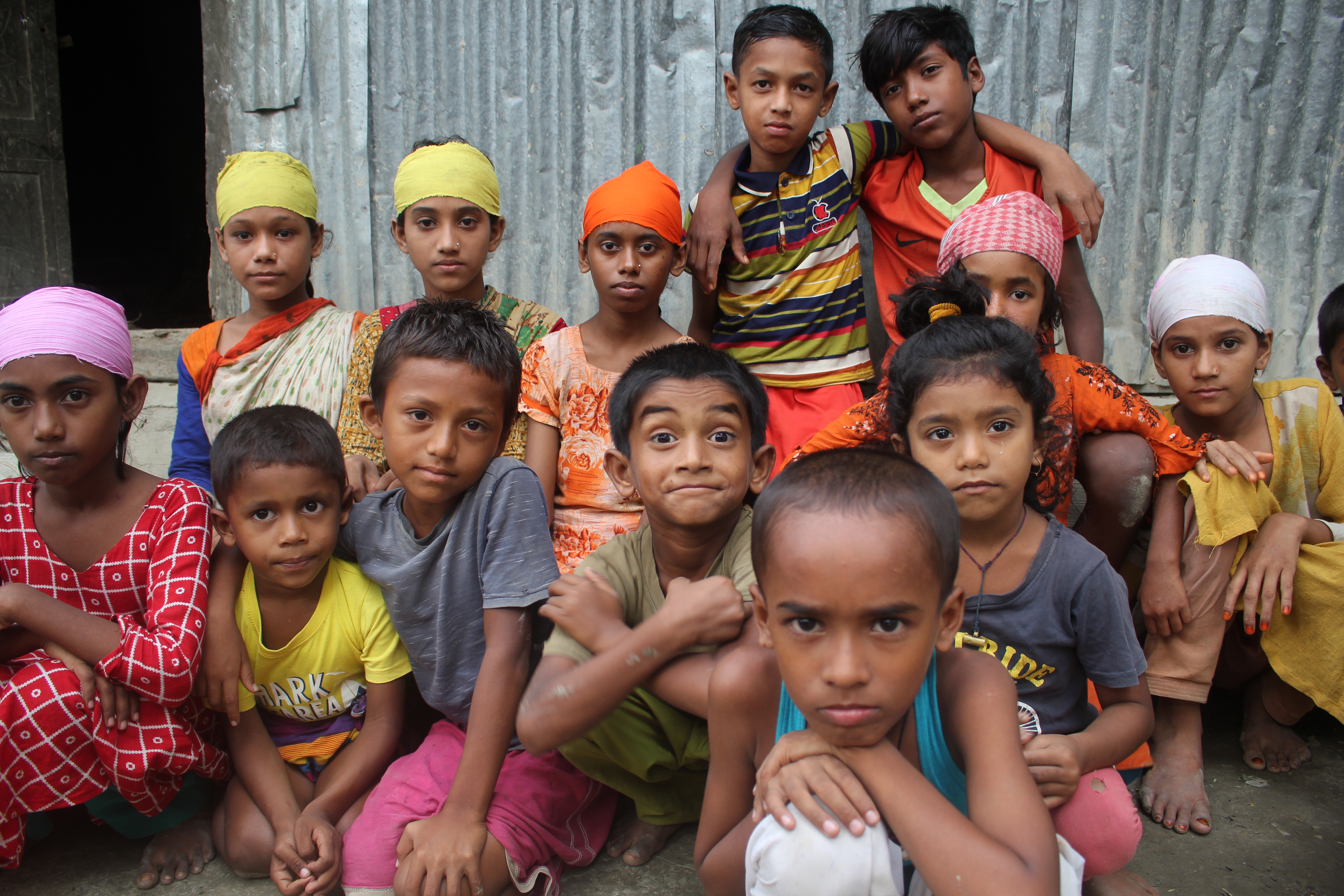
Anchal
According to the convention on the Rights of the Child in article 6: “Every child has the inherent right to life, and the State has an obligation to ensure the child's survival and development”.
Integrated Child Survival and Development centre (Anchal) is a unique approach for child survival and development together.
There is strong and growing evidence that injury is a leading killer of children in Bangladesh that has not been adequately recognized yet and is still under counted.For the first timenation-wide community based inquiry named Bangladesh Health and Injury Survey (BHIS) revealed that every year 30,000 children die, 13,000 children become permanently disabled and 1,000,000 children suffered from illness of different severity and duration due to injury in Bangladesh. Injuries alone account for 38 percent of all classifiable deaths in children aged 1-17. The Survey (BIHS) identified lack of supervision, lack of information, hazardous environment, and traditional views of treating injury as God’s will are the key factors of child mortality and morbidity by injury in Bangladesh. However, it is evident from the developed countries that injuries can be preventable through proper interventions and awareness.
In order to combat the child mortality caused by injury, Centre for Injury Prevention Research, Bangladesh (CIPRB) designed and implemented a comprehensive child injury program called Prevention of Child Injuries through Social-intervention and Education (PRECISE), in 2006 in three sub-districts in Bangladesh. Integrated Child Survival and Development centre (Anchal) is one of the major interventions of the PRECISE. Anchal is a very innovative and unique intervention program that addresses both safety, development, hygiene, nutrition and other health issues of the Bangladeshi children.
According to the BHIS about 50% of the drowning and other injuries took place during 9 a.m. to 2 p.m. when parents are busy with their work and the siblings go to school. Anchal was established in order to reduce injury related child mortality through providing supervision and a risk free environment to the children aged 1–5 years under direct supervision of a qualified care giver during the hours of 9 a.m. – 1 p.m., when their primary caregiver is working and also to provide early childhood development. It is an alternate form of child care which provides appropriate institutional supervision for young children in a safe environment outside their normal homes as well as to provide appropriate exposure for growth and development.
The process of human development is a complex issue which begins from birth. Early childhood growth stage is the most crucial one as children develop their linguistic and cognitive skills. At this stage they also exhibit substantial progress in their emotional, social, and moral capacities. Children seek out opportunities to learn and need relationships with other humans for healthy development. The interactive influences of nature (biological factors) and nurture (experience factors), with environment and culture affecting parenting practices shape and develop the children brain and their engagement with society. A large body of study revealed that from birth to age five children rapidly develops fundamental capabilities on which subsequent development builds. The right frequency, quality and intensity of interactions between children and their environment will result in each child reaching his or her full potential.
The interaction between genetics and early experience creates either a strong or weak foundation for all the learning, behavior, and health that follow. There is also evidence that early learning improves the child’s chances of enjoying good health, being socially skilled, and not committing crimes. Therefore it is often viewed child development is a foundation for community development and economic development, as capable children become the foundation of a prosperous and sustainable society.
Considering the above mentioned issues, along with safety Anchal also provides an opportunity for better early childhood development. It provide a learning environment of vibrancy and warmth to children who are rarely spoken to, exposed to few toys, and who have little opportunity to explore and experiment with their environment and therefore may fail to fully develop the neural connections and pathways necessary to facilitate later learning. The Anchal programme helps children, particularly in rural areas, to access preschool education and therefore preparing them for the often daunting transition into primary education.
Besides that Anchal createseconomic and social opportunities for women and also provide a platform to gain knowledge on various health issues, nutrition, hygiene, safety behaviour, injury prevention techniques and age-appropriate early learning knowledge, and early child development. It provides an opportunity for the mother to work outside or at home comfortably while dropping their children at Anchal. It is worth mentioning that in poor country like Bangladesh Anchal provides an opportunity for women to increase their productivity leads to reduce poverty and promote their qualities of life which ultimately help in social and economic development of the country.
It also accelerates inclusion and active participation of women, which in turn improve their social status as well as empower other women through transferring knowledge on safety behaviour and ECD.
Under the PRECISE project 640 Anchal provided safety and development support to 25,000 children during the period of 200-2010. Nearly 1300 women had been working as Anchal Maa and Assistant in this 640 Anchal in 3 upazilas in Bangladesh.
At present CIPRB is runing 150 Anchal under IDRCB project. Initially 4 Anchal was established in three intervention areas namely Raiganj, Sherpur and Manohardi in 2006. The continuous demand for Anchal over the last three years lead to increase the number of Anchal from 4 to 640 in the intervention areas.
After four years implementation of the program it was revealed that Anchal has a significant protective effect on injury prevention as well as significant positive effect on childhood development.
Benefit of Anchal
Survival of children
Anchal provide a environment to children where they can stay safely under supervision of a trained and skill caregiver. Fifty percent of the death, disability and illness due to injury can be prevented among the children who will be participating the program.
Early Childhood Development
Anchals program provide appropriate stimulation for linguistic development, motor development, development for social, moral and emotional skill. Provide access preschool education and therefore preparing them for the often daunting transition into primary education.

Other Health Issues
Anchal provide opportunity to practice personal hygiene (hand washing, cleaning teeth, and cutting nail).
Women empowerment:
In one centre 2 women are working in one Anchal. Both of them are earning money for their family. Both of them received training which make them confident in the society. Main Anchal care giver (Anchal Mother) conduct parent meeting every month which make them more conversant, confident and respectable in the society. The people of the community are respecting Anchal mother and her assistant as they are taking care of their children regarding safety and development. Respect to the women is a very important issue for better society.
In parents’ meeting every month mothers of the children have scope for discussion on various issues in safety, development, and other social issues which make them better knowledgeable and help them to be better person in the society.
Enhancing productivity of the parents
Anchal provides the mother to work outside or work at home comfortably while dropping their children at Anchal. Furthermore the filling of safety and comfort of children at Anchal also assist in improving productivity of parents. In Bangladesh poverty is the most serious problem for people particularly in rural area. Anchal providing an opportunity for women to increase their productivity leads to reduce poverty and promote their qualities of life which ultimately help in social and economic development of the country.
Improving People’s awareness
The Anchal program plays an important role in increasing public awareness about the injury prevention, safety, Early Childhood Development (ECD) and parenting. When dropping off their children at the Anchal as well as in parents meeting parents are introduced to the various elements of safety and development. The parents also gain knowledge on child development and parenting practices
Community development
Anchal accelerates community development as it periodically brings together parents and other community members to discuss and organize different safety educational programs to prevent injury and promote ECD themes. There is a committee for every Anchal. The committee actively participates in the management of the Anchal. The participants may vary from renowned rural people to school teachers and religious figures. The committee also discusses injury prevention and ECD issues and techniques, and decides how to implement them in their area. In this way the project has contributed in building social capital and trust within communities. Resolving collective problems, advancing community development and widening the awareness about a range of critical issues all result in an enhancement in the quality of life of rural people.


